
Marching On
infestations, foundations and such

The last time I wrote about ants, last summer, I spoke with an endearing tone. A curiosity, awe, complimentary even. And complementary too, as I discussed the symbiotic tiny partnership between ants and birds via the process of “anting.” My feelings have changed.
The summer heat slows down much of the wildlife in the desert. Rabbits and coyotes come out briefly at dawn and dusk then return to hiding. Ants are another story. Ants seem to multiply in the summer. And then seek out the indoors to escape the heat and search for water sources.
It’s one thing to see a collection of ants in a bathroom or corner of the kitchen. It’s another to see thousands migrating from one room to another at 3am when you’re sleep deprived and feeding a baby.
One night a few weeks ago, Matt felt a bite. This is never a good sign. We pulled back the blankets to find that yes, once again, the ants had entered the bed. We looked down to see a brigade of them along the wooden base, trailing across the bedroom, into the hallway, and then across into my office.
The thing about an ant infestation is that you immediately want to find someone, or something to blame for it. When in fact, nature is just taking over and the ants are coexisting with us in the best way they can. We later found out what they were seeking was a recently dead roach.
The anger bubbles up inside and has to go somewhere. The burn of their bite creates a heat, an itch, that will inevitably lead to an outburst. Finding an ant infestation lends itself to the 5 stages of grief:
Denial: that wasn’t actually a bite, that was a random nerve ping in my foot. I am so tired, I must be imagining things. We just had an infestation a week ago, there’s no way they could repopulate. If I don’t turn on the lights and look under the covers, they aren’t there.
Anger: you have to be fucking kidding me. They are in fact in the bed and everywhere else. Matt immediately starts smashing ants with his fingers to satisfy the build up of resentment. I had always heard killing them leads to more ants coming. It doesn’t matter now. We’d welcome more to show up at this point. We must obliterate them all.
Bargaining: unfortunately there is no bargaining with an ant colony. Matt took a flashlight outside to see if there was a nest on the external wall of my office… nothing. No ants in the area at all. Are they coming from under the house? We don’t even want to think about it. Return to stage 1 of denial and repeat stage 2 as well.
Depression: we sit silently in bed. We have set traps, sprinkled the cinnamon, wiped up ants we’d drowned in cleaning spray. The massacre is complete, but we feel numb and empty. This doesn’t feel like a victory.
Acceptance: I go to the bathroom, and when I return, I peel off clumps of ants from the bottoms of my feet before getting under the sheets. With the lights off, we close our eyes. All we can see are ants.
The thing about an ant infestation is it immediately feels like an existential threat.
They are relentless, their tiny one-track coordinated minds have no concern for us, only their duty. I stay on the bed with my baby, the only safe island (barely) from the sea of ants below. The only redeeming piece of our early morning escapade is that I heard the sound of a vacuum is the same decibels as the sound inside of the womb, and I wonder if Hayes is comforted by Matt whirling around the room sucking up the carcasses. The baby is asleep anyway as I inspect every millimeter of his skin for tiny enemies.
Enough time has passed to look back on that night without getting heated. I try to see the ants for what they are. Childbirth is one form of ego death and sympathizing with an ant is another.
I think about what they represent. Community, shared work, gathering, hunting, growing. I think about everyone that’s organized and migrated to our home to help care for us and the baby. Everyone shows up for the shared goal. They don’t think, just act.
Ants build homes. They are architects, like my father. They know how to facilitate a strong foundation on which entire colonies are built. They can lift 10 to 50 times their body weight. They actually have muscle fibers that contract and expand. If we could lift that much, we’d be lifting up cars. I think of the scenario of a mother being able to lift one off of her child if needed. How do ants reproduce? Do they care for babies like us? Would they save them the same way? I suddenly feel guilty for what happened that night.
Queen ants have wings and are able to fly up until they are fertilized. Once fertilized, they pull off their own wings and sacrifice flight for the birth of newborns. She rips them off to be able to navigate underground tunnels more easily as once establishing a colony, she will live her remaining 12 years in the subterranean kingdom. Without wings, the energy formerly used to work those wing muscles is repurposed to feed the newborns via trophallaxis (regurgitation). Oh the irony and the timing of learning this.
I wish I could go visit her colony. I’d apologize for what I’ve done. I had to do it. If I had the world’s smallest pair of tweezers, I’d go find her wings (if they weren’t already eaten). I’d ask her if she’d like to try them on again. Her body has changed, and so has her purpose. But maybe she’d like to keep them. I don’t have wings to shed, but I think about what I’ve given up. I wouldn’t eat my wings. I’d hang them up in the home we’ve built for all to see.
Love,
Lily
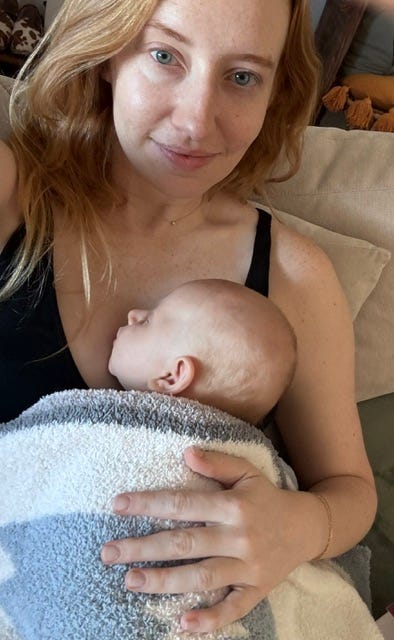
P.S. I didn’t take any photos of the massacre, so here’s me and Hayes writing this newsletter together:
Lily I love and resonate with every word of this!