
Dyed Naturally
and being thankful for the collective

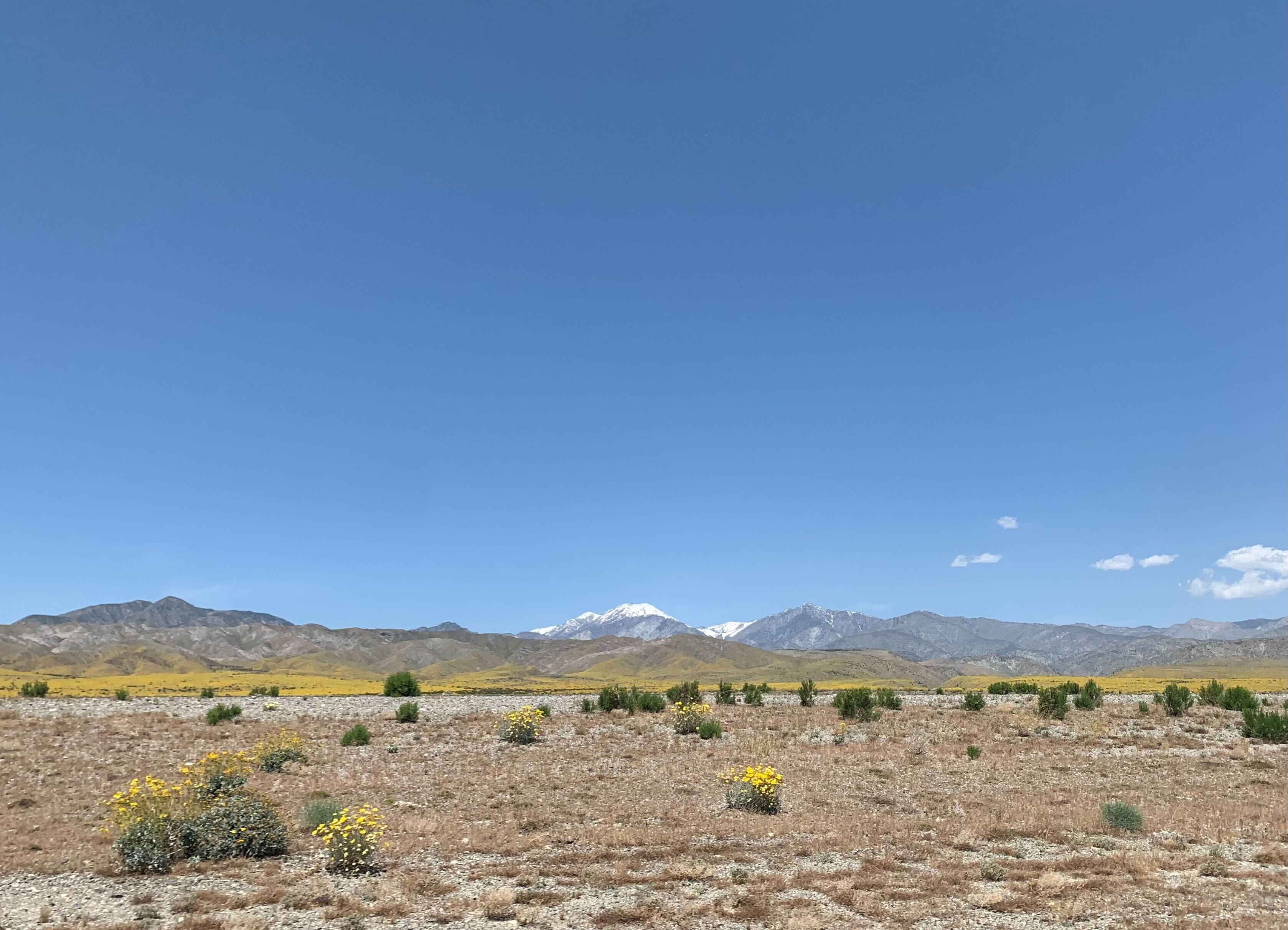
I’m waiting for the snow to arrive on the San Gabriel mountains - it should be here already, but it’s not. Every time I drive on Highway 62 I’m reminded of the valley-ness of the hi desert. We are surrounded not by mountains, fully, but by gentle hills that hold us in tight. I love when the taller of the hills (mountains) are draped in white but the whole desert is still bright yellow and glowy. I particularly love the snow in the background with the blooming rabbit brush in the foreground, a plant I got to know intimately last weekend as I plucked off her sticky flowers and made natural dyes.
While the desert might be changing and the population growing, some good comes with that - more community activities can occur, and be funded, with more available audiences, like the courses at High Desert Observatory. I choose to go to classes and workshops initially because of the subject matter and skill I’ll acquire, but the people I meet and inspiration I glean is always a positive externality.
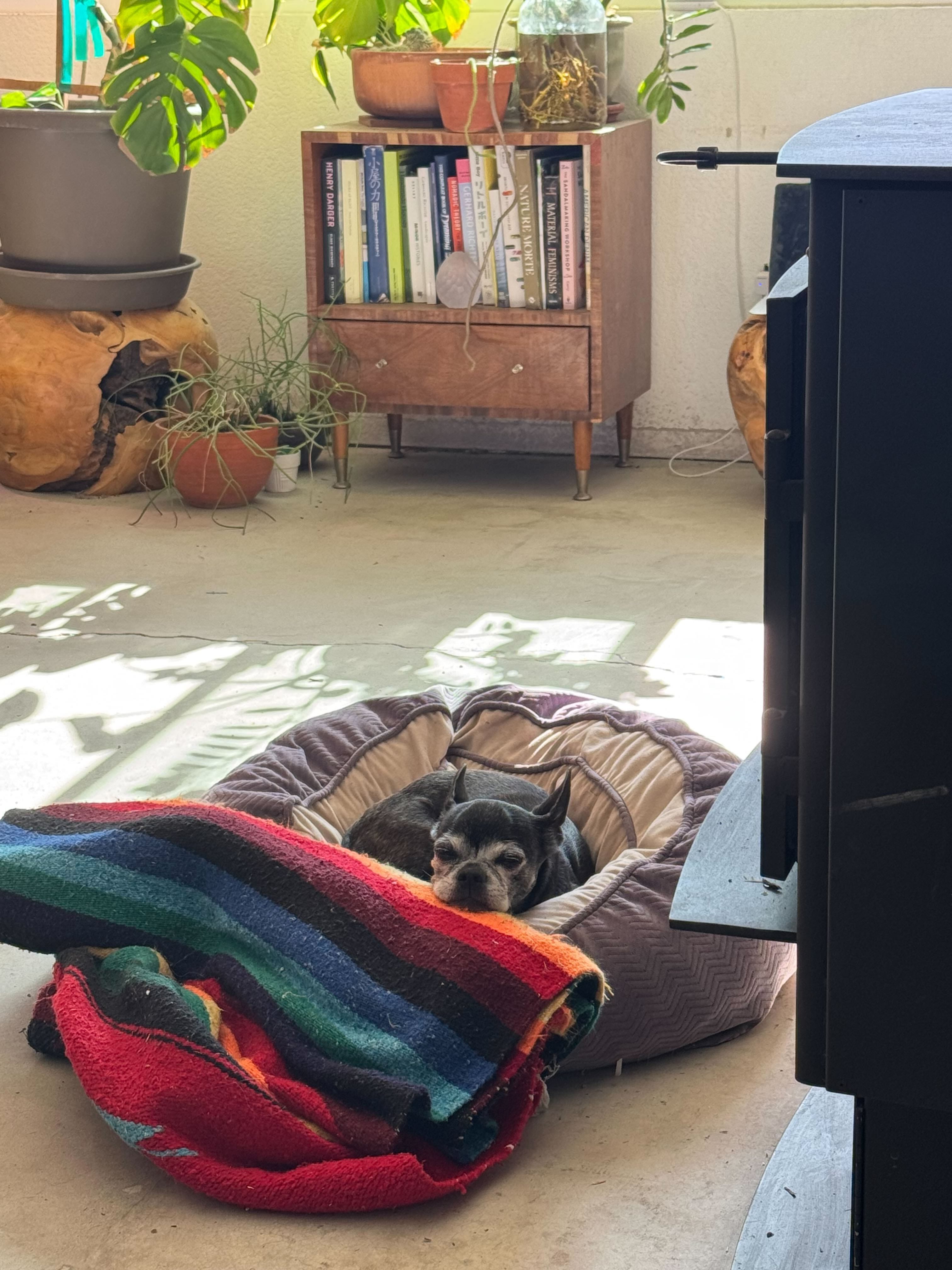
The dyeing course was primarily locals, all of whom had moved here within the past ~6 years. We gathered at Emily’s home, with their dog Io (after Jupiter’s moon). The plants were pre-harvested for us from Emily’s property or their neighbor’s - native plants aren’t to be collected from public lands.
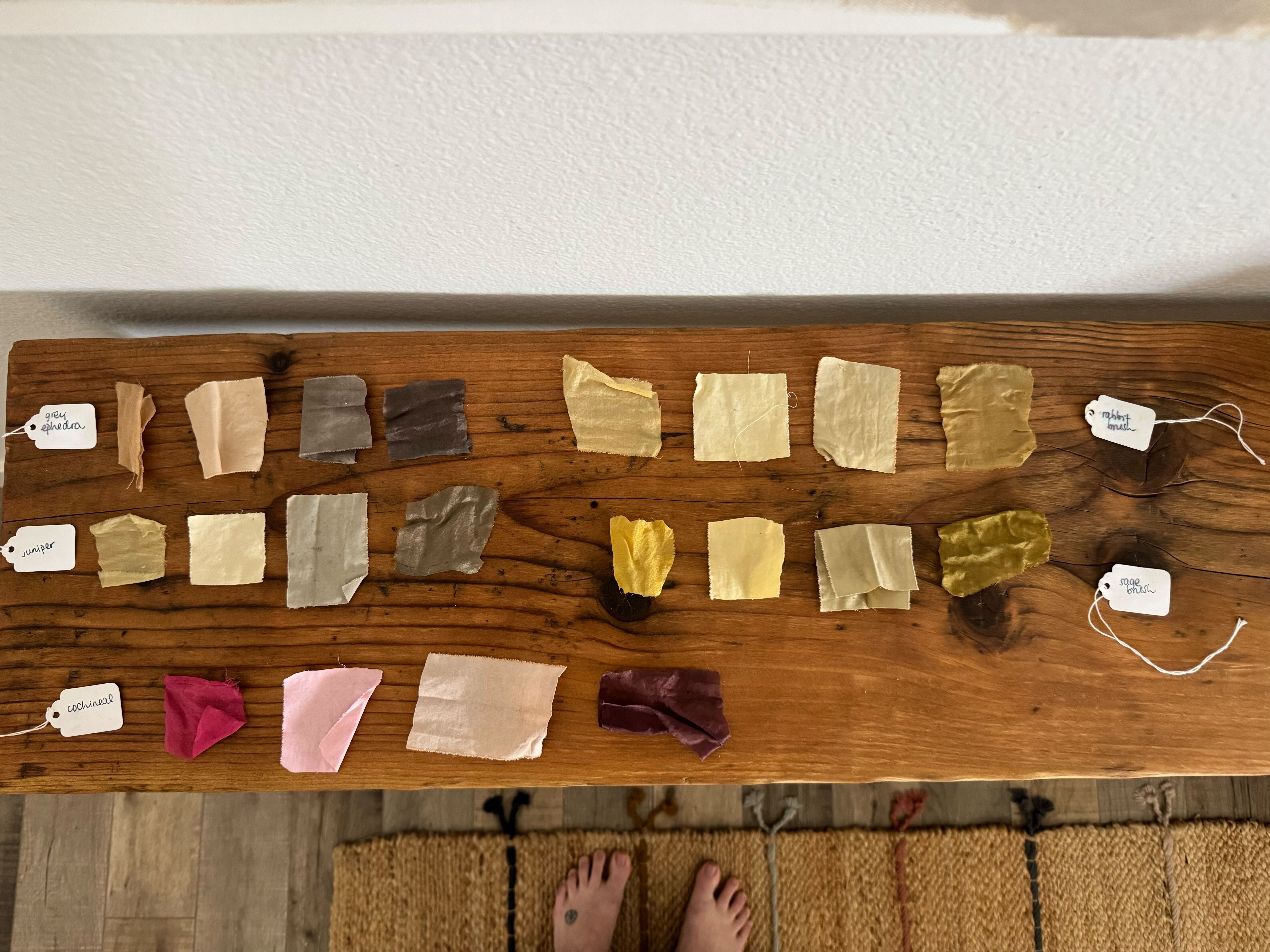
We prepped juniper, sage brush, rabbit brush, grey ephedra (mormon tea) and cochineal (or carmine, the insect). We sat around the big table pulling off flowers and berries, or breaking up sticks, or grinding up the cochineal into a purple red powder. We bonded via shared labor. We all contributed.


After preparing the plant material, we boiled them in various bubbling pots. We added lime juice to the cochineal, as acids make the reddish purple a warmer tone. It ends up the color of pinot noir, which takes me back to summer and scooping flies out of my glasses of wine with my fingernail.
We tied up our silk and cotton scarves shibori-style before dropping them into the water and then stirred and waited for the dying process to complete. We crowded around the pots and smelled the various teas we were creating. Only one person caught on fire as the desert wind blew around the flames of the camp stoves (she’s fine, and she wasn’t me) - and another workshop attendee put it out.
With the downtime, we got to know each other more. We laughed at how we’d never crossed paths despite living in the same neighborhoods or going to the same activities for years. One of the visitors asked the locals if we wished the desert had anything it’s currently missing. A few folks said shared community spaces where you actually see more of the people you live with, the ones you don’t see in locations we frequent that could be exclusionary to everyone - how you might see people at parks or on the street in bigger cities, not just our coffee shops or restaurants or yoga studios. The closest we get is the farmers markets or the grocery store, but at least we have them.


The dyeing process ended and we removed our fabrics. To get a muted, cooler tone of dye, we dunked our scarves in a bath of iron. The process is called “saddening” the fabric. We talked about how some “natural” things can be harmful - how a famous indigo dyer always said “death is natural.” You must prep natural fibers via mordanting, which can include aluminum sulfate, and that shouldn’t be inhaled or touched. We wondered if our hands were suddenly toxic.
We left the house after dark and said we’d all see each other again soon.


The morning after the workshop I went to the diner early to read. I listened to someone visiting gripe about having to wait outside for their to-go order. The diner is so small that it can’t safely support lingering at the entrance - “tis the season,” I muttered to the waitress, to which she said “don’t we know it.” The town can hardly support the influx of visitors during high season. Those of us who have experienced the seasons year over year know what to expect, and try our best to support how we can (i.e. going places during off hours instead of meal time rushes with everyone else). I told him at least it wasn’t the coldest part of the winter yet.
I happened to be reading Rebecca Solnit’s essay “The Ideology of Isolation,” a reflection on the importance of the collective, and particularly social and ecological systems. Like the tourists, we are not from here and will never be able to claim that. However, we can all do our part to recognize our place, whether in the desert for only a while or within the greater context of society.
“We are nodes on intricate systems, synapses snapping on a great collective brain; we are in it together, for better or worse.”
I didn’t want to sit alone anymore, especially after reading the essay, so I turned to the patron next to me - Richard, the 74 year old who drives his Triumph motorcycle 10 miles to breakfast and “doesn’t go any faster than a 74 year old should.” We enjoyed each other’s company that morning.
“If you forget what you derive from the collective, you can imagine that you owe it nothing and can go it alone.”
We’re grateful to have spent the Thanksgiving holiday with our desert family at Megan’s house. As the sun started to set, a natural separation occurred between visiting folks heading inside for warmth and our full-time community sitting around the melted puddles of candle wax and empty wine bottles. I looked around at the faces of the people I’ve grown to appreciate and love. It happens fast out here, like a magnetism to get to the deep, dark roots of who everyone is, where everyone comes from, and to love everything you find.
“Ecological thinking articulates the interdependence and interconnectedness of all things… when we try to pick out anything by itself, we find it hitched to everything else in the Universe.’”


I was expecting my hands to be dyed from the workshop, but nothing stayed. Reminds me of the conversation I had on Wednesday night with my yoga teacher on non-attachment. But these friendships and love in the desert, those are much more interconnected. Those are much more permanent.
Love,
Lily
catching up—loved this one, lil.
Love this!